
Canterbury · 24/7
Safe Opening in Canterbury
Householders and businesses across Canterbury, from the listed terraces along Church Street to the rural properties near Chartham, call on us when a safe will not open. A lost combination or a stiff boltwork mechanism need not mean losing the safe entirely. Our safe engineers favour non-destructive opening wherever the model allows, always working once proof of ownership has been confirmed.
- Fixed quotes
- DBS-checked
- Insured work
- Local engineer
The local picture
Safe Opening for Canterbury properties
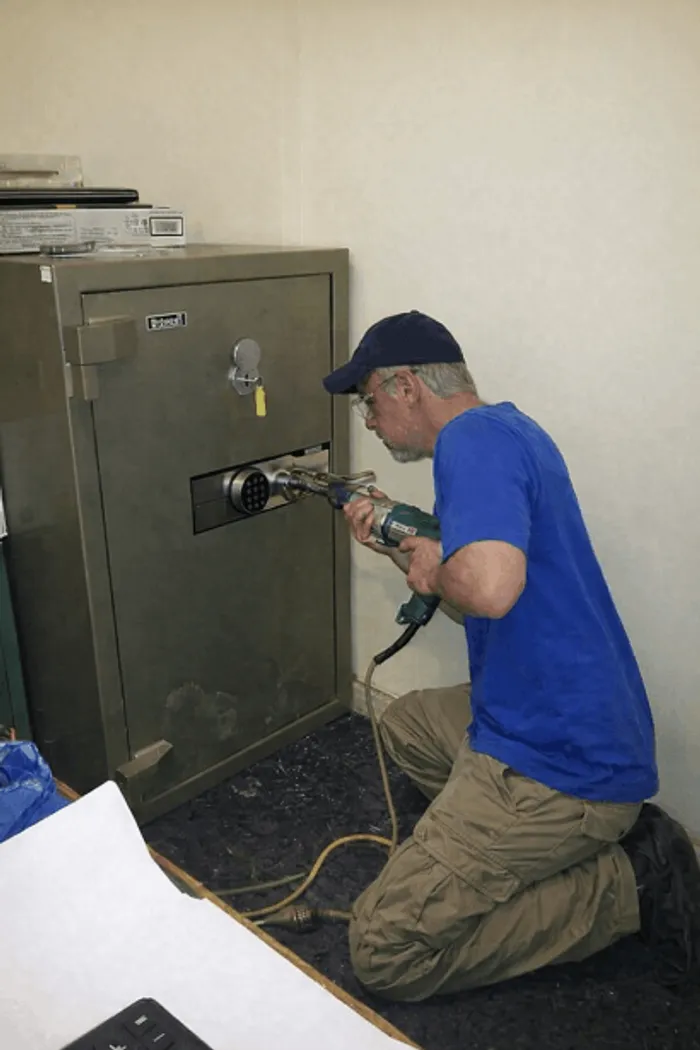
On Church Street, safes are often tucked into cellars or built into the fabric of Georgian and Medieval terraces, where floor loading and joinery limit where a unit can sit. When a combination is lost or a dial mechanism sticks, our safe engineer works through non-destructive opening methods first, examining the boltwork and locking pattern before considering any drilling. Proof of ownership is requested before work begins, in keeping with standard practice for safe opening across the city center.
Harbledown's Victorian houses, set along the hillside above the city, frequently hold older domestic safes passed down through several occupants, sometimes with no working key or record of the combination. These units vary widely in construction, and a careful assessment of the boltwork configuration helps determine whether manipulation, decoding, or a controlled entry point will cause least disturbance to the case and its finish.
In Hersden, interwar semi-detached and detached properties often house more recent safes, including electronic keypad models fitted for home offices or small business use. A lost combination on these units usually points to a dead battery or a corrupted keypad rather than a mechanical fault, and our approach is adjusted accordingly. Whatever the model or its age, proof of ownership remains a standard requirement before any opening proceeds.
Good to know
Safe Opening — your questions
My family safe in Chilham has a lost combination and no paperwork. What happens next?
We will first need proof of ownership before any opening work begins, particularly for a property in a conservation village where provenance often matters. A safe engineer will then assess whether non-destructive opening is feasible given the lock type, or whether the boltwork construction means drilling is the only reliable route.
What determines whether a safe opening in Canterbury is straightforward or a specialist job?
The lock mechanism and boltwork design are the main factors: a basic key-operated safe in a Barton Estate flat is usually far simpler than a older combination unit found in a Church Street listed building. Age, manufacturer, and whether the safe has a relocker triggered by a previous forced attempt all affect whether non-destructive opening remains an option.
Do I need to be present for a safe opening, and what should I have ready?
Yes, we ask that the account holder or property owner is present with proof of ownership, such as a purchase receipt, insurance schedule, or correspondence naming the safe's serial number. This protects everyone and allows the safe engineer to proceed straight to assessing the lock and boltwork rather than pausing partway through.
Where we work
Covering Canterbury
Our engineers are local, so response times stay short across these neighbourhoods:
- Studd Hill
- Crundale
- Woolage Village
- Wickhambreaux
- Patrixbourne
- Wingham
- Lyminge
- The Fairways
Postcode districts: CT1 · CT2 · CT3 · CT4 · CT5 · CT6
Also from us